
Eight Years That Created a Market
What Contractor K changed with BuilderHub
BIM quantities took the place of 2D formula-based estimating. Not because the quantities got smaller — but because, for the first time, they became visible.
- Subject
- Korean general contractor (Contractor K)
- Period
- 2017 — 2026
- Product
- BuilderHub-Q → BuilderHub-R
Prologue
Why we are telling this story
When we introduce BuilderHub in Japan, the most common question is not “Does it really work?” but “Where do we start?”
Korea did not start out using BIM quantities either. Rebar estimating and quantity verification belonged for a long time to the world of 2D drawings and formulas — listing members in Excel, multiplying lengths by counts, adding a contingency. BuilderHub did not enter a new market. It stepped into work people were already doing, and changed how it was done.
So this is not a story about “adopting good software”. It is a record of how a market that did not exist was created. And it did not happen all at once.
2017
Adoption — the site builds its own models
Not an outside vendor: site staff themselves generated BIM models from CAD drawings. It started with reducing dependence on subcontractors.
2018 — 2023
Part 1 · Finding the cause of the gap
BIM quantities, estimated quantities and rebar shop drawing quantities were compared three ways, and every difference was explained one by one.
2024 — 2026
Part 2 · Accumulated data becomes process
The structural frame BIM data piled up into a database, connecting conceptual estimates at order intake all the way through to settlement.
2026 —
Part 3 · From cost saving to winning work
The BIM team moved into the bid estimating department. It is no longer a tool for building well — it is a tool for winning work.
Four Chapters
Part 1 “Are the quantities right?” · Part 2 “Can we hold the cost ratio?” · Part 3 “Can we win better than the others?” The order matters. The later ones do not stand without the earlier ones.
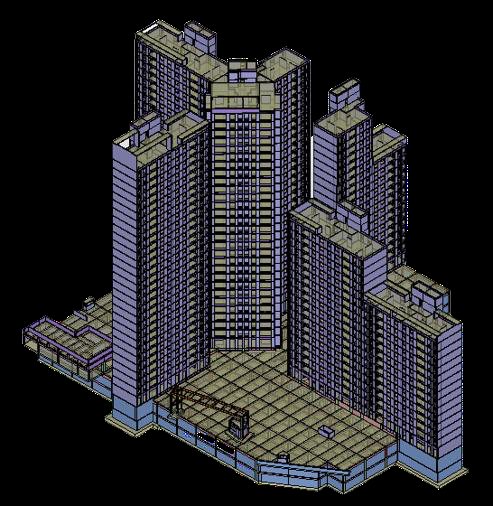 01Part 1 · 2017 — 2023Making invisible quantities visibleThree-way comparison to pin down the cause of the gap, and a standard built by separating structural from assembly rebar.Read more →
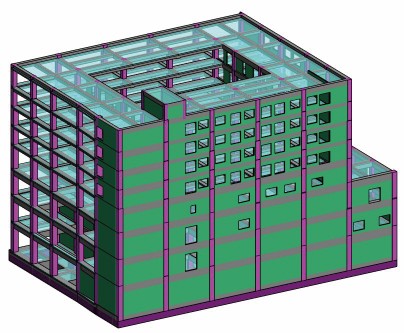 02Part 2 · 2024 — 2026Accumulated data becomes processAccumulated data becomes a database, connecting order intake through to settlement.Read more →
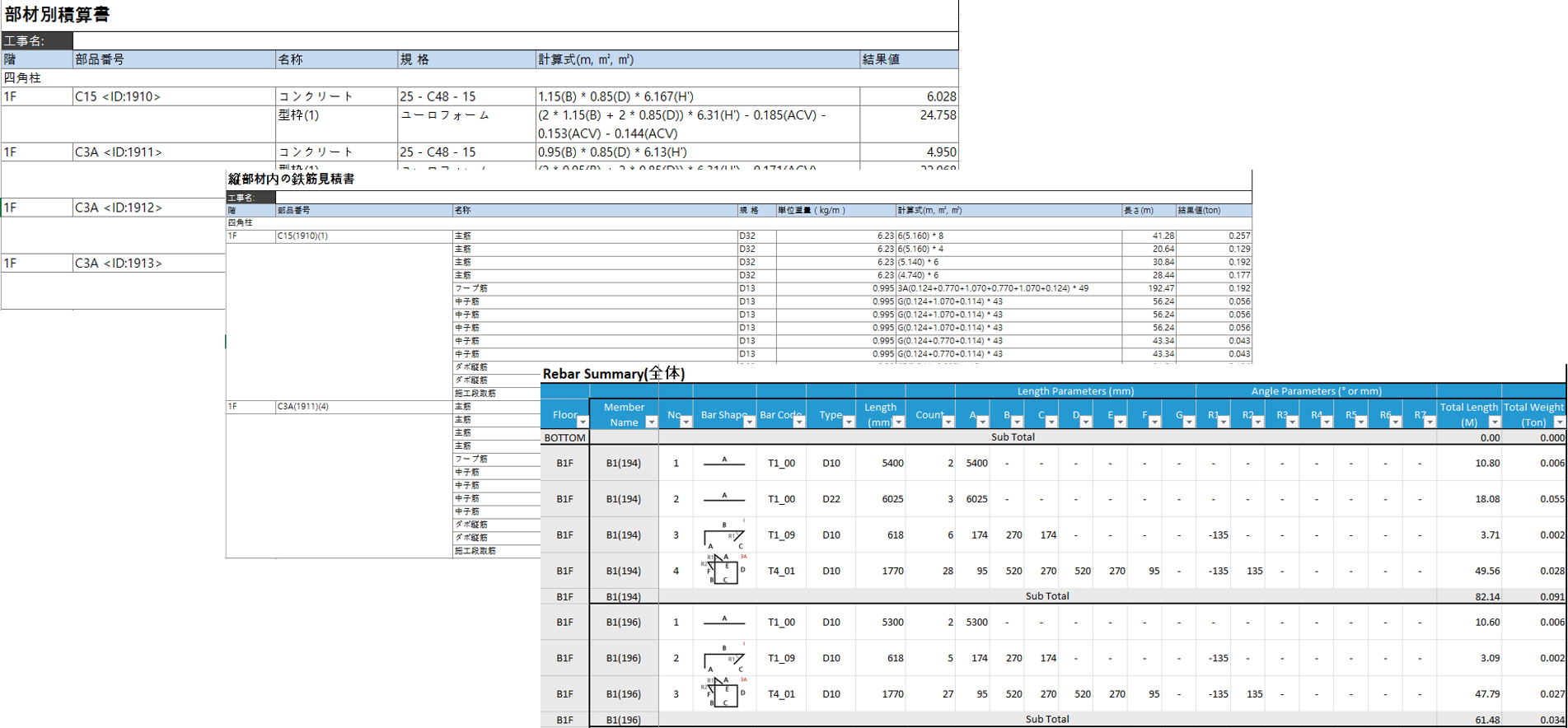 03Part 3 · 2026 —From cost saving to winning workThe BIM team moves to bid estimating. Quantity accuracy becomes competitiveness.Read more →
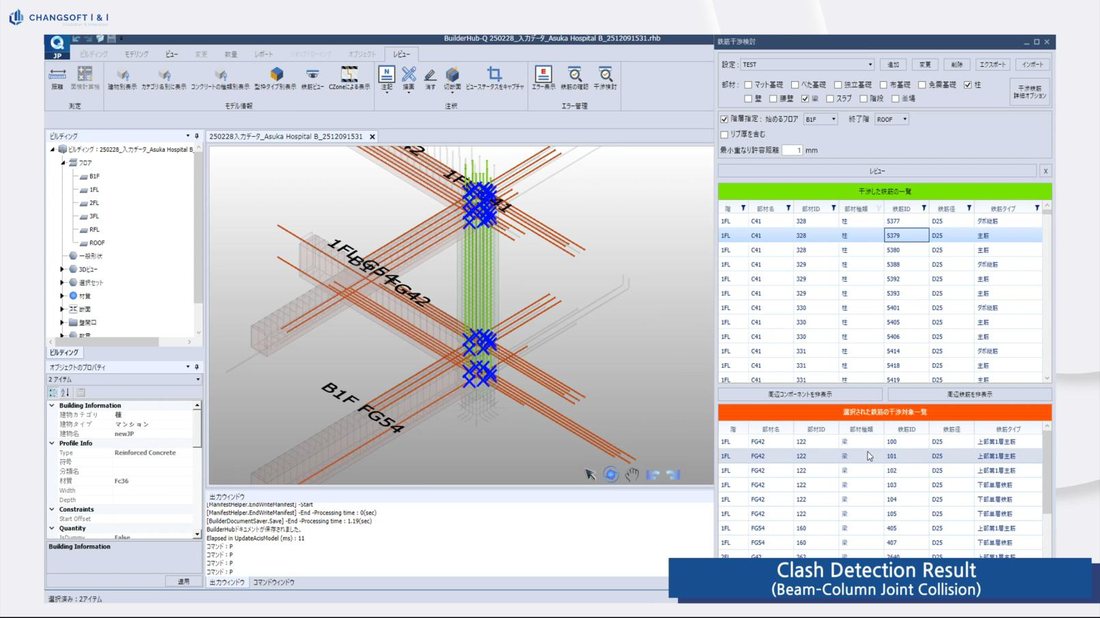 04Part 4 · Into the Japanese marketFrom “how much do we need” to “how will it be built”From Q, built for estimating, to R, built for constructability. The path a Japanese customer will take.Read more →
The customer and project names are anonymized, and figures are cited only from publicly announced material and within a pre-agreed scope. Diagrams and charts were newly produced from the source data.